The technical textile industry requires materials that deliver consistent performance even under demanding operating conditions. Nylon filament yarn is one of the most widely used synthetic yarns in technical textile manufacturing due to its abrasion resistance, elasticity, excellent strength, and processing efficiency.
Manufacturers commonly use nylon filament yarn in automotive components, industrial safety equipment, or reinforcement fabrics. The choice of yarn directly influences product efficiency, durability, and service life.
What is Nylon Filament Yarn?
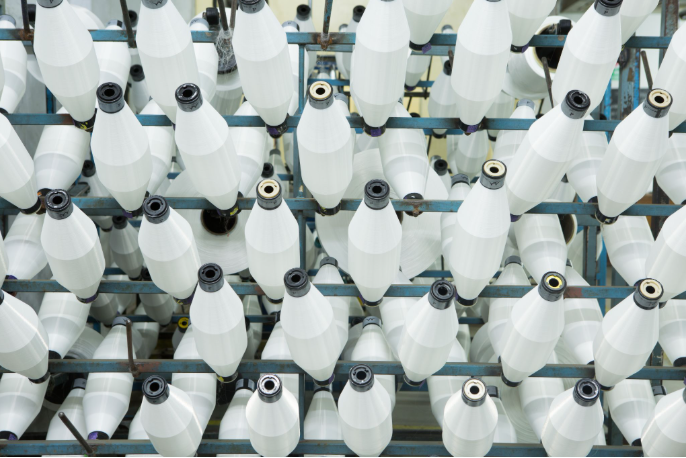
Nylon filament yarn is a continuous synthetic fibre produced from polyamide polymers. Unlike spun yarns, this yarn is made from a long, continuous filament that provides a uniform structure, a smooth surface, and consistent mechanical performance.
Manufacturers produce nylon filament yarn in different forms depending on the application. Multifilament yarn consists of multiple fine continuous filaments for softness, flexibility, and higher coverage. Nylon monofilament yarn consists of a single continuous filament with higher rigidity, excellent wear resistance, and dimensional stability.
These yarns are widely used across technical fabrics where superior strength and operational life are essential.
Key Features of Nylon Filament Yarn
Nylon filament yarn is widely used across industrial sectors due to its balanced combination of manufacturing efficiency and mechanical performance.
Features |
Industrial Advantage |
High Tensile Strength and Load-Bearing Capability |
Supports heavy mechanical loads without breaking, making it suitable for demanding industrial products. |
Abrasion Resistance and Surface Durability |
Nylon filament yarn offers excellent abrasion resistance, helping fabrics retain their performance even after prolonged use. Its durable surface minimises maintenance requirements and extends product life in high-performance environments. |
Elasticity and Flexibility in Technical Applications |
Its flexibility makes it suitable for products that undergo repeated movement and vibration. Nylon filament yarn stretches under load and returns to its original shape once the force is removed. |
Lightweight Structure with Dimensional Stability |
Despite its impressive strength, nylon filament yarn remains relatively lightweight. This helps maintain dimensional stability by maintaining the shape during weaving and knitting. |
The combination of strength, abrasion resistance, flexibility, and dimensional stability supports the reliable performance of nylon filament yarn in technical fabrics across various industrial applications.
Also Read: What is Polyester Spun Yarn? Benefits and Textile Industry Uses
Performance Characteristics of Nylon Filament Yarn in Technical Fabrics
The performance of nylon filament yarn depends not only on its strength but also on durability, processing consistency, and resistance to environmental conditions.
-
Consistent Diameter and Uniform Fabric Construction
Continuous filament production gives nylon filament yarn a uniform diameter throughout the manufacturing process. This consistency allows manufacturers to produce stable fabric weight, uniform mechanical properties, and appearance.
-
Resistance to Wear, Fatigue, and Mechanical Stress
Technical textiles experience continuous mechanical stress throughout their service life. Nylon filament yarn demonstrates excellent resistance to cyclic loading, surface wear, repeated bending, and mechanical fatigue. These characteristics contribute to a longer service life and lower replacement costs for industrial applications.
-
Chemical and Moisture Resistance Properties
Nylon filament yarn has excellent resistance to grease, oil, and many industrial chemicals commonly used during manufacturing and end use. Its performance characteristics allow it to maintain reliable mechanical properties across varying environmental conditions when appropriately selected for the intended application.
-
Compatibility with High-Speed Weaving and Knitting Systems
The modern textile industry relies on high-speed machinery for improved output and productivity. The uniform structure and smooth surface of nylon filament yarn allow manufacturers to reduce yarn breakage, minimise machine stoppages, and improve fabric consistency during weaving and knitting.
These performance characteristics make nylon filament yarn a dependable choice for technical fabrics, offering consistent quality, efficient processing, and reliable performance across demanding industrial applications.
Industrial Uses of Nylon Filament Yarn
The versatility of nylon filament yarn allows it to serve a broad range of technical textile industries where reliability and durability are essential.
Industrial Uses |
Properties |
Filtration Fabrics and Industrial Mesh Applications |
Offers excellent abrasion resistance, a uniform filament diameter, and consistent filtration performance. Commonly used in filter cloths, filtration screens, industrial mesh, and sieves. |
Automotive and Reinforcement Textile Products |
Provides high tensile strength, durability, and flexibility under mechanical stress. Commonly used in airbags, seat belts, tyre cords, and reinforcement fabrics. |
Conveyor Belts, Safety Nets, and Industrial Webbing |
Combines load-bearing capability with wear resistance for demanding industrial environments. Commonly used in lifting slings, conveyor belts, safety nets, and cargo straps |
Outdoor, Packaging, and Technical Fabric Segments |
Dimensional stability, lightweight construction, and long-lasting performance make it suitable for outdoor and industrial applications. Commonly used in backpacks, protective covers, and technical packing fabric |
These industrial applications demonstrate why nylon filament yarn continues to be a preferred fibre across multiple industrial sectors.
Also Read: A Complete Guide to Polyester & Nylon Multifilament Yarn
Factors Influencing Nylon Filament Yarn Price
Several factors influence the nylon filament yarn price in the industrial market.
- Raw material cost for polyamide polymers
- Yarn denier and filament count
- Manufacturing technology and quality control standards
- Surface treatments and specialised finishes
- Order volume and supply chain conditions
- Packaging, logistics, and export requirements.
Understanding these factors enables buyers to evaluate pricing more efficiently while balancing cost with long-term product performance.
Buyer Considerations When Sourcing Nylon Filament Yarn
Buyers should consider both technical specifications and manufacturing capabilities to ensure consistent product quality when sourcing nylon filament yarn.
- Uniformity of filament diameter
- Tensile strength and elongation requirements
- Abrasion and fatigue resistance
- Quality assurance procedures
- Compatibility with existing weaving and knitting equipment
- Supply consistency and production capacity
These considerations help manufacturers achieve consistent fabric quality while improving production efficiency and reducing operational risk.
Conclusion
Nylon filament yarn plays an important role in technical textile manufacturing by combining strength, flexibility, abrasion resistance, and efficient processability. It is used in various areas, such as automotive components, filtration fabric, and outdoor technical products. Nylon filament yarn provides dependable performance across a wide range of technical textile applications.
Similarly, nylon monofilament yarn offers excellent dimensional stability, a consistent structure, and durability for precision industrial uses. By selecting yarns that meet specific performance requirements, manufacturers can achieve greater long-term value through improved processing efficiency and consistent quality standards.