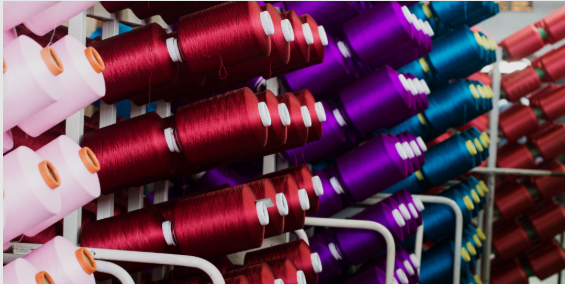
Polyester spun yarn is widely used in textile manufacturing because it combines durability, process efficiency, and cost control in a single yarn structure. Polyester spun yarn is produced from short polyester staple fibres that are spun together to create a yarn with a softer and more natural textile feel.
Its balanced performance makes it suitable for apparel, home textiles, industrial fabrics, and high-volume manufacturing applications. In modern textile production, polyester spun yarn is valued not only for strength and consistency but also for its compatibility with dyeing, blending, knitting, weaving, and sewing operations.
What is Polyester Spun Yarn and How It Is Made
Polyester spun yarn is a yarn made by spinning polyester staple fibres into a continuous yarn structure. These staple fibres may be produced from virgin polyester or recycled PET-based polyester materials, depending on the application and manufacturing requirements. The manufacturing process generally involves:
- Fibre preparation and opening
- Carding and fibre alignment
- Drawing and blending
- Spinning and twisting
- Winding and package formation
Compared to filament yarns that use continuous strands, polyester spun yarn contains multiple short fibres twisted together. This creates a yarn surface with better bulk, softness, and fabric-like texture.
The yarn can be produced in different counts, twist levels, and finishes depending on the required textile application. Polyester spun yarn is also commonly blended with cotton, viscose, or other fibres to achieve specific comfort and performance characteristics.
Also Read: What is Yarn Spinning Process
Benefits of Polyester Spun Yarn in Textile Manufacturing
Polyester spun yarn is widely preferred because it supports efficient textile production while maintaining stable fabric performance across large manufacturing volumes.
| Performance Area | Manufacturing Benefit |
| Cost efficiency | Supports large-scale economic production |
| Dimensional stability | Maintains consistent yarn structure during processing |
| Low shrinkage | Helps maintain after washing |
| Process compatibility | Suitable for weaving, knitting, sewing, and dyeing |
| Durability | Performs well under repeated use and washing |
| Blend flexibility | Compatible with cotton and other fibres |
Cost Efficiency and High Production Scalability
Polyester spun yarn is considered cost-efficient because polyester fibres can be processed at a large industrial scale with stable output quality. The yarn supports high-speed spinning, knitting, and weaving operations, helping manufacturers improve production efficiency.
Its long service life and low replacement frequency also contribute to better lifecycle cost performance in textile products.
Also Read: Advantages of Recycled Polyester Yarn
Consistent Quality and Process Compatibility
One of the major advantages of polyester spun yarn is process consistency. Uniform yarn count, controlled twist, and stable tensile properties help reduce breakage during weaving and knitting. The yarn is compatible with multiple textile processes, including:
| Ring spinning | Rotor spinning |
| Knitting | Weaving |
| Sewing thread manufacturing | Yarn dyeing |
This versatility makes polyester spun yarn suitable for both mass production and specialised textile applications.
Low Maintenance and Easy Care Properties
Polyester spun yarn fabrics generally require less maintenance compared to many natural fibre textiles. The yarn offers:
| Better wrinkle resistance | Faster drying |
| Lower moisture absorption | Good shape retention |
These properties make polyester spun yarn suitable for easy-care garments, uniforms, and frequently washed textile products.
Versatility Across Multiple Textile Segments
Polyester spun yarn can be engineered for different end uses by adjusting fibre type, yarn count, twist structure, and blending ratios. This flexibility allows manufacturers to use polyester spun yarn across:
| Apparel fabrics | Sewing threads |
| Technical textiles | Industrial fabrics |
| Home furnishing textiles | |
The same base fibre system can therefore support multiple textile categories without major process changes.
Durability and Long-Term Performance
Polyester fibres are known for good abrasion resistance and structural stability. As a result, polyester spun yarn performs reliably in products exposed to repeated use, washing, and handling. Compared to many natural fibre yarns, polyester spun yarn generally demonstrates:
| Better resistance to stretching | Lower shrinkage |
| Improved dimensional stability | Longer service life |
These characteristics are important in textile segments where durability directly affects product value and replacement cycles.
Applications of Polyester Spun Yarn in the Textile Industry
Polyester spun yarn is used across multiple textile sectors because it balances production efficiency, durability, and fabric versatility. Its compatibility with both woven and knitted structures allows manufacturers to use it in high-volume as well as application-specific textile products.
Apparel
In apparel manufacturing, polyester spun yarn is widely used in products that benefit from durability, shape retention, and easy maintenance during regular use.
| T-shirts | Sportswear |
| Casual wear | Innerwear |
| Blended shirting fabrics | |
Its balanced strength and lightweight structure help maintain garment appearance after repeated washing, making it suitable for large-scale apparel production.
Home Textiles
Home textile manufacturers use polyester spun yarn where dimensional stability and long-term surface consistency are important.
| Bed linen | Curtains |
| Cushion fabrics | Upholstery |
| Decorative fabrics | |
The yarn supports good fabric durability while helping home textile products retain colour, structure, and appearance under regular household use.
Industrial Textiles
In industrial applications, polyester spun yarn is selected for its process stability and reliable mechanical performance.
| Sewing threads | Narrow fabrics |
| Protective textile products | Lightweight technical fabrics |
Its controlled yarn structure allows smoother processing during stitching, weaving, and fabric conversion operations used in industrial manufacturing environments.
High-Volume Manufacturing and Export Products
Polyester spun yarn is commonly preferred in export-oriented textile manufacturing because it supports scalable production with controlled quality consistency.
| Consistent bulk manufacturing | Stable colour processing |
| Faster production cycles | Cost-controlled fabric manufacturing |
Its availability across multiple yarn counts and blends makes it practical for manufacturers handling large production volumes across different textile categories.
Buyer Considerations for Polyester Spun Yarn
Selecting polyester spun yarn involves more than comparing yarn counts or pricing. Buyers must evaluate how the yarn performs during downstream textile processing, how consistently it behaves across production batches, and whether the supply chain can support long-term manufacturing requirements.
Quality and Consistency Standards
Yarn consistency directly affects machine efficiency, fabric appearance, and dyeing performance during textile production. Buyers generally evaluate:
- Yarn evenness
- Tensile strength
- Twist consistency
- Hairiness control
- Dyeing uniformity
Even small variations in yarn structure can lead to issues such as uneven fabric surfaces, shade inconsistency, or increased machine stoppages during weaving and knitting.
Cost vs Performance Evaluation
Lower-cost yarn may reduce immediate raw material expenses, but inconsistent performance can increase operational costs during production. Buyers typically assess:
- Production efficiency
- Fabric durability
- Process wastage
- Long-term performance
For large-scale manufacturing, overall production stability is often considered more important than yarn price alone.
Supplier Reliability and Bulk Availability
Reliable supply becomes especially important in continuous textile manufacturing, where production schedules depend on stable material availability. Buyers often prioritise suppliers capable of:
- Consistent batch quality
- Large-scale supply capability
- Technical support
- Stable delivery timelines
Strong supplier consistency also helps reduce quality variation between production lots and improves long-term manufacturing planning.
Refer: Textile Yarns – Performance – Activewear Yarns
Advantages of Using Polyester Spun Yarn
Polyester spun yarn remains widely used in textile manufacturing because its balanced properties allow manufacturers to use the yarn across multiple textile categories without major changes in production systems.
- Cost-effective for large-scale textile production
- Good durability and abrasion resistance
- Suitable for blending with multiple fibres
- Easy-care and low-maintenance properties
- Compatible with knitting, weaving, and sewing processes
- Available in virgin and recycled polyester forms
- Supports consistent production quality across batches
Together, these advantages make polyester spun yarn practical for both cost-sensitive manufacturing and performance-oriented textile applications.
Conclusion
Polyester spun yarn remains one of the most widely used yarn categories in modern textile manufacturing because it balances performance, scalability, and cost efficiency. Its spun fibre structure provides a softer textile feel while maintaining the durability associated with polyester materials.
From apparel and home textiles to industrial applications, polyester spun yarn supports efficient manufacturing and reliable long-term fabric performance. As textile production continues to prioritise consistency and process efficiency, polyester spun yarn continues to play an important role across multiple textile sectors.