What is Textured Yarn?
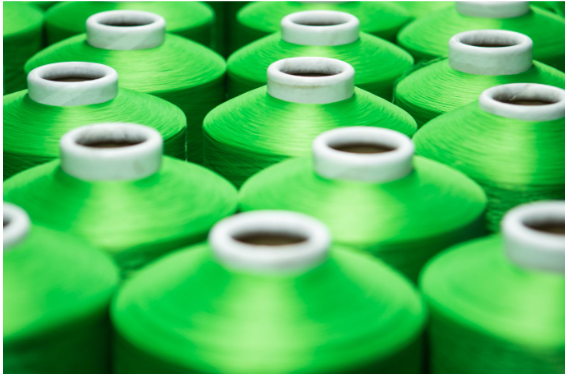
Textured yarn is a filament yarn that has been mechanically or thermally modified to create bulk, crimp, loops, or elasticity within the filament structure. Unlike flat filament yarns, textured yarns are engineered to improve softness, stretch, coverage, and fabric performance without cutting the continuous filaments.
In textile manufacturing, texturing changes how the yarn behaves in fabric form without changing the polymer itself. This process improves characteristics such as flexibility, insulation, moisture handling, and visual texture.
Most textured yarns are produced using synthetic materials such as polyester and nylon because these polymers respond effectively to heat-setting and deformation processes. Among them, polyester textured yarn remains one of the most widely used due to its balance of durability, process efficiency, and cost control.
Types of Textured Yarn Used in Textile Manufacturing
Different types of textured yarn are used depending on the required stretch, surface appearance, mechanical performance, and end-use application.
Draw Textured Yarn
Draw Textured Yarn (DTY) is produced by simultaneously drawing and texturising partially oriented yarn (POY). During the process, filaments are stretched and heat-set to create permanent crimp and elasticity. DTY is widely used in apparel, home textiles, upholstery, and knitted fabrics because it offers:
| Soft hand feel | Controlled stretch and recovery |
| Better fabric bulk | Improved comfort in garments |
Polyester DTY is especially common in high-volume textile manufacturing due to its processing stability and versatility across weaving and knitting applications.
Air Textured Yarn
Air Textured Yarn (ATY) is manufactured using compressed air that creates loops and entanglements within continuous filaments. Unlike false twist methods, air texturing produces bulk without significant elasticity. ATY is often selected when manufacturers require a yarn that resembles spun yarn aesthetics while maintaining filament yarn durability. Common applications include:
| Upholstery fabrics | Decorative textiles |
| Outdoor fabrics | Industrial sewing threads |
Its cotton-like appearance and low hairiness make it suitable for applications where visual texture is important.
False Twist Textured Yarn
False Twist Textured Yarn is produced by twisting, heat-setting, and untwisting filament yarns. Although the twist is removed, the filaments retain a permanent crimped structure. This method is one of the most widely used texturing processes for polyester textured yarn because it provides:
| High elasticity | Uniform bulk |
| Better fabric recovery | Consistent yarn structure |
False twist texturing is commonly used in sportswear, stretch fabrics, hosiery, and technical textiles, where flexibility and shape retention are important.
Refer: Textile Yarns by Aymsyntex
Polyester Textured Yarn: Performance and Industrial Relevance
Polyester textured yarn plays a major role in modern textile manufacturing because it combines mechanical durability with scalable production efficiency. Its adaptability across apparel and industrial sectors makes it one of the most commercially important textured filament yarn categories.
Key Properties of Polyester Textured Yarn
Polyester textured yarn offers a combination of structural and functional properties that support high-speed textile processing and long-term product performance.
Property |
Industrial Relevance |
| Bulk and softness | Improves fabric comfort and coverage |
| Dimensional stability | Maintains fabric shape during use |
| Abrasion resistance | Supports durability in high-use applications |
| High Wicking | Enables quick drying and low water absorption |
| Uniform filament structure | Supports consistent fabric appearance |
| Controlled elasticity | Enhances flexibility without excessive deformation |
These characteristics make polyester textured yarn suitable for both lightweight apparel fabrics and demanding industrial textile applications.
Cost Efficiency and Scalability in Manufacturing
One reason polyester textured yarn is widely used is its manufacturing efficiency. Polyester polymers exhibit excellent performance in high-speed operation and continuous texturing systems, enabling large-scale production with consistent quality. Compared to many natural and speciality fibres, polyester textured yarn offers:
- Lower production variability
- Better process consistency
- Faster manufacturing throughput
- Cost-effective over its life span
This balance between performance and production scalability makes polyester suitable for mass-market textile manufacturing as well as industrial fabric production.
Suitability for Apparel and Technical Textile Applications
Polyester textured yarn shows versatility across different textile sectors because manufacturers can modify denier, filament count, texture level, and bulk characteristics depending on application requirements.
In apparel, it improves softness, drape, and wearer comfort. In technical textiles, it provides dimensional stability, abrasion resistance, and long-term durability under repeated mechanical stress. This versatility allows the same polymer platform to support products ranging from activewear fabrics to automotive textiles and industrial upholstery.
Also Read: Why AYM Syntex is the Best Choice for Polyester Yarn Manufacturers
Application-Based Selection of Textured Yarn
Selecting the right textured yarn depends on the performance requirements of the final product instead of the yarn’s appearance alone.
Apparel Applications
In apparel manufacturing, textured yarns are primarily selected for comfort, stretch behaviour, softness, and fabric aesthetics. Common apparel applications include:
| Sportswear | Innerwear |
| Casual garments | Knitted garments |
| Leggings and resilient fabrics | |
DTY and false twist textured yarns are commonly preferred because they provide controlled elasticity and improved fabric recovery during repeated movement and washing.
Industrial Applications
Industrial textiles place greater significance on structural performance, durability, and environmental resistance. Textured yarns used in industrial applications are commonly found in:
| Automotive fabrics | Upholstery |
| Carpet backings | Technical fabrics |
| Industrial sewing threads | |
In these environments, yarn selection depends heavily on abrasion resistance, dimensional stability, and long-term mechanical performance rather than softness alone.
Refer: Home Textile Yarns by Aymsyntex
Key Performance Parameters for Selecting Textured Yarn
Selecting textured yarn is not only about fibre type or softness. In textile manufacturing, yarn performance directly affects product durability. A yarn that performs well in apparel may not withstand industrial stress conditions, while a highly durable industrial yarn may not provide the comfort or drape required in garments.
For this reason, manufacturers evaluate textured yarns through a combination of structural, mechanical, and processing-related parameters before selecting them for a specific application.
Bulk and Coverage Efficiency
Bulk determines how much surface area and volume a yarn can create without significantly increasing weight. Higher bulk improves insulation, softness, and fabric fullness while reducing material consumption in some applications.
Elastic Recovery and Stretch Performance
Elastic recovery refers to the yarn’s ability to return to its original shape after extension. For apparel applications, balanced stretch and recovery are important to prevent fabric deformation during repeated use.
Abrasion Resistance and Durability
Industrial and high-use textiles require yarns that can resist friction, compression, and surface wear over long operating cycles. Polyester textured yarn performs well in these conditions due to its stable filament structure.
Dyeability and Colour Consistency
Uniform dye uptake is important in textile manufacturing because uneven colouration can affect fabric appearance and batch consistency. Controlled filament structure helps textured filament yarn maintain a more consistent colour distribution during dyeing.
Environmental Resistance
In outdoor or industrial applications, textured yarns may be exposed to moisture, chemicals, UV radiation, and varying temperatures. Polyester-based textured yarns generally offer good resistance to moisture and moderate environmental exposure.
Advantages of Choosing the Right Textured Yarn
Selecting the correct textured yarn improves both manufacturing efficiency and final product performance. Key advantages include:
- Better fabric comfort and appearance
- Improved durability under repeated use
- Enhanced process efficiency during knitting and weaving
- More consistent fabric structure
- Reduced material waste from processing instability
- Improved long-term product performance
Proper yarn selection also helps manufacturers balance cost, aesthetics, and technical requirements more effectively.
Conclusion
Textured yarn plays an essential role in modern textile manufacturing by improving fabric bulk, elasticity, softness, and functional performance. Different texturing methods create different yarn behaviours, making application-based selection critical for achieving the desired fabric outcome.
Among all textured filament yarn categories, polyester textured yarn continues to dominate due to its durability, scalability, and adaptability across apparel and industrial sectors. By evaluating parameters such as stretch performance, abrasion resistance, bulk, dye consistency, and environmental resistance, manufacturers can select textured yarns that align with both processing requirements and end-use expectations.