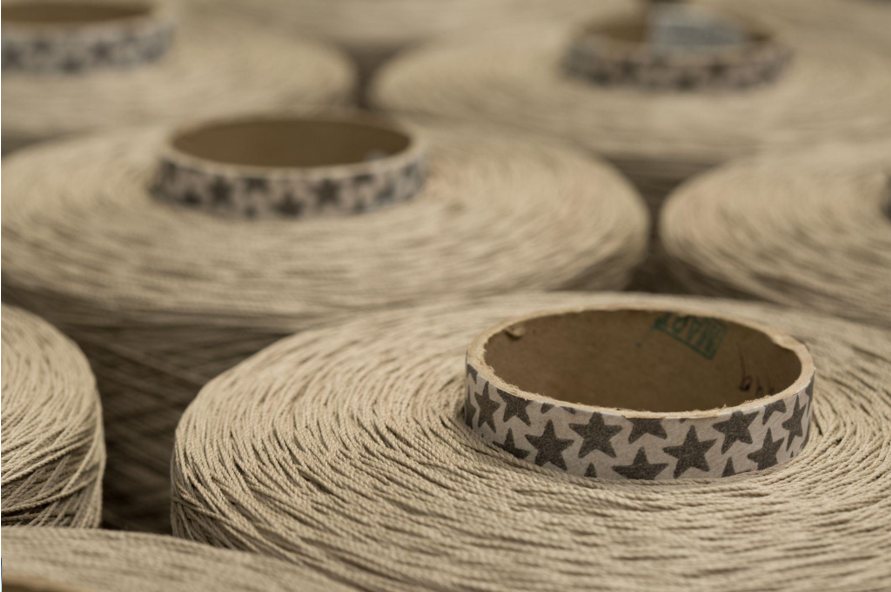
Cabled yarns are widely used in textile and industrial manufacturing where higher strength, durability, and structural stability are required. By combining multiple plied yarns into a single, balanced structure, cabled yarns provide improved mechanical performance compared to standard yarn constructions. This makes them suitable for demanding applications such as ropes, carpets, industrial fabrics, and technical textiles.
What are Cabled Yarns?
Cabled yarns are constructed by twisting two or more plied yarns together in the opposite direction of their original twist. This method, often referred to as spinning cabled yarn, creates a balanced yarn structure with enhanced strength and reduced torque.
Unlike single or simple plied yarns, cabled yarns are engineered specifically for applications where performance under stress, repeated use, or environmental exposure is critical. The additional twisting and layering improve cohesion between filaments, resulting in a more stable and durable yarn.
Key Properties of Cabled Yarns
The performance of cabled yarns comes from their engineered structure. Each property contributes directly to how the yarn behaves under stress and during long-term use.
Performance Factor |
Role in Carpet Performance |
Enhanced Tensile Strength |
Cabled yarns exhibit higher tensile strength due to the combined structure of multiple plies. This allows them to withstand higher loads without breaking, making them suitable for industrial and load-bearing applications. |
Improved Durability |
The compact and balanced structure reduces fiber movement and surface wear. This leads to better resistance against abrasion, fatigue, and repeated mechanical stress. |
Dimensional Stability |
Cabled yarns maintain their shape and structure under tension. The opposing twist directions minimize yarn distortion, which helps maintain fabric integrity over time. |
Versatility |
Cabled yarns can be produced using different fibers and yarn types, including polyester, nylon, and blended materials. This flexibility allows them to be adapted for both textile and industrial applications. |
Together, these properties make cabled yarns reliable for applications where consistency and long-term performance are essential.
Also read: Polyester Yarns – Understanding Polyester Threads Composition and Uses
Types of Cabled Yarns
Cabled yarns can be structured in different ways depending on the required strength, flexibility, and end-use application.
Two-Ply Cabled Yarn |
Multi-Ply Cabled Yarn |
|
Formed by cabling two plied yarns together, this is the simplest form. It offers a balance between strength and flexibility and is commonly used in textiles and light industrial applications. |
Constructed using multiple plied yarns, these yarns provide higher strength and durability. They are used in heavy-duty applications such as industrial fabrics and technical textiles. |
Cotton and Synthetic Cabled Yarns |
Specialty Industrial Cabled Yarns |
|
Cabled yarns can be made from natural fibers like cotton or synthetic fibers such as polyester and nylon. Synthetic cabled yarns are generally preferred in industrial applications due to their consistency, strength, and resistance properties. |
These are engineered for specific performance requirements such as high load-bearing capacity, resistance to environmental factors, or compatibility with coating and finishing processes. |
Selecting the right type depends on how the yarn is expected to perform in the final application.
Applications in Textile and Industrial Manufacturing
The structural advantages of cabled yarns translate directly into a wide range of textile and industrial uses.
1. Carpets and Upholstery
Cabled yarns are used in carpets and upholstery where durability and resilience are essential. Their structure helps maintain pile integrity and surface appearance over time.
2. Ropes and Industrial Nets
Due to their high strength and load-bearing capacity, cabled yarns are widely used in ropes, nets, and safety applications.
3. Apparel and Knitting
In apparel, cabled yarns are used where enhanced durability and structure are required, such as in outerwear, denim, and knitted fabrics.
4. Technical and Protective Textiles
Cabled yarns are suitable for technical textiles, including industrial fabrics, safety gear, and coated materials, where performance reliability is critical.
These applications highlight how cabled yarns bridge both conventional textiles and high-performance industrial uses.
Also read: Industrial Fabrics: Benefits of Industrial Nylon & Woven Fabrics
Quality and Selection Considerations for Buyers
Choosing the right cabled yarn requires evaluating both material characteristics and processing requirements.
1. Fiber Type
The choice between polyester, nylon, or other fibers affects strength, flexibility, and environmental resistance. Synthetic fibers are commonly preferred for industrial use.
2. Number of Plies and Twist Level
Higher ply counts and optimized twist levels improve strength and durability but may affect flexibility and processing.
3. Mechanical Performance
Factors such as tensile strength, elongation, and abrasion resistance should align with the intended application.
4. Processing Compatibility
Yarn compatibility with weaving, knitting, coating, or extrusion processes is essential for efficient production and consistent output.
A balanced evaluation of these factors ensures that the selected yarn meets both performance and production requirements.
Also read: The Importance of Choosing the Right Yarn for Your Project
Impact on Fabric Performance and Production Efficiency
Cabled yarns improve fabric performance by enhancing strength, reducing deformation, and maintaining structural integrity under stress. This results in longer-lasting products with consistent performance.
From a manufacturing perspective, their stability reduces yarn breakage during processing, leading to improved production efficiency and reduced material waste. This is particularly important in large-scale textile and industrial operations.
Common Issues and Limitations
Despite their advantages, cabled yarns have certain limitations:
- Higher production complexity due to additional twisting processes
- Increased yarn weight compared to single yarns
- Reduced softness in some applications
- Potential increase in production cost
Proper yarn selection and process control help mitigate these limitations.
Conclusion
Cabled yarns play an important role in modern textile and industrial manufacturing by delivering enhanced strength, durability, and structural stability. Their engineered construction makes them suitable for applications where standard yarns may not provide sufficient performance.
By selecting the appropriate fiber type, ply structure, and processing parameters, manufacturers can optimize both product performance and production efficiency. As demand for high-performance textiles continues to grow, cabled yarns remain a reliable solution for meeting both functional and operational requirements.